
Product comparison guide
Portable coffee machine buying guide: battery, pressure, adapters and cup size
Learn how to compare published portable coffee machine specifications without treating a single number or marketing image as the complete buying decision.
1. Start with the use and buying scenario
A travel product, office coffee routine, double-cup demonstration and premium gift set do not need the same presentation or accessories. Define the destination market, channel, coffee format and packaging goal before ranking models.
TK Classic publishes use-case labels for each current model. These labels help narrow the range but do not replace the full specification and sample review.
2. Read pressure as one specification
The current TK Classic range lists a 25 bar extraction platform, but pressure alone does not identify the best model for a program. Battery, charging, heating, cup design, size, adapters and included components also affect suitability.
When two models share a pressure figure, compare the remaining fields rather than assuming that their operation or configuration is identical.
3. Compare battery, charging and cup information
A larger battery number does not by itself describe charging time or heated-cup output. The revised DQ-005 manual lists about four hours with 5 V / 3 A charging, while the confirmed DQ-010 record lists about two hours via USB Type-C. Cup formats include the 300 mL DQ-001 and DQ-005, the 325 mL DQ-010 and the separately documented formats of other models.
Use the model table and individual product pages to keep these figures attached to the correct images and model names.
4. Confirm adapters, accessories and commercial terms
Name the required capsule or ground-coffee format in the inquiry. Confirm the cup, adapter, charging component, optional accessories, branding and packaging together.
Price, MOQ, payment, lead time, Incoterms, warranty and shipping depend on the selected project and are therefore confirmed in the formal quotation rather than published as universal promises.
Compare only model-specific information.
These values come from the current TK Classic product records. Open the product page for the full specification and matching images.
| Model | Position | Pressure | Battery | Cup | Charging |
|---|---|---|---|---|---|
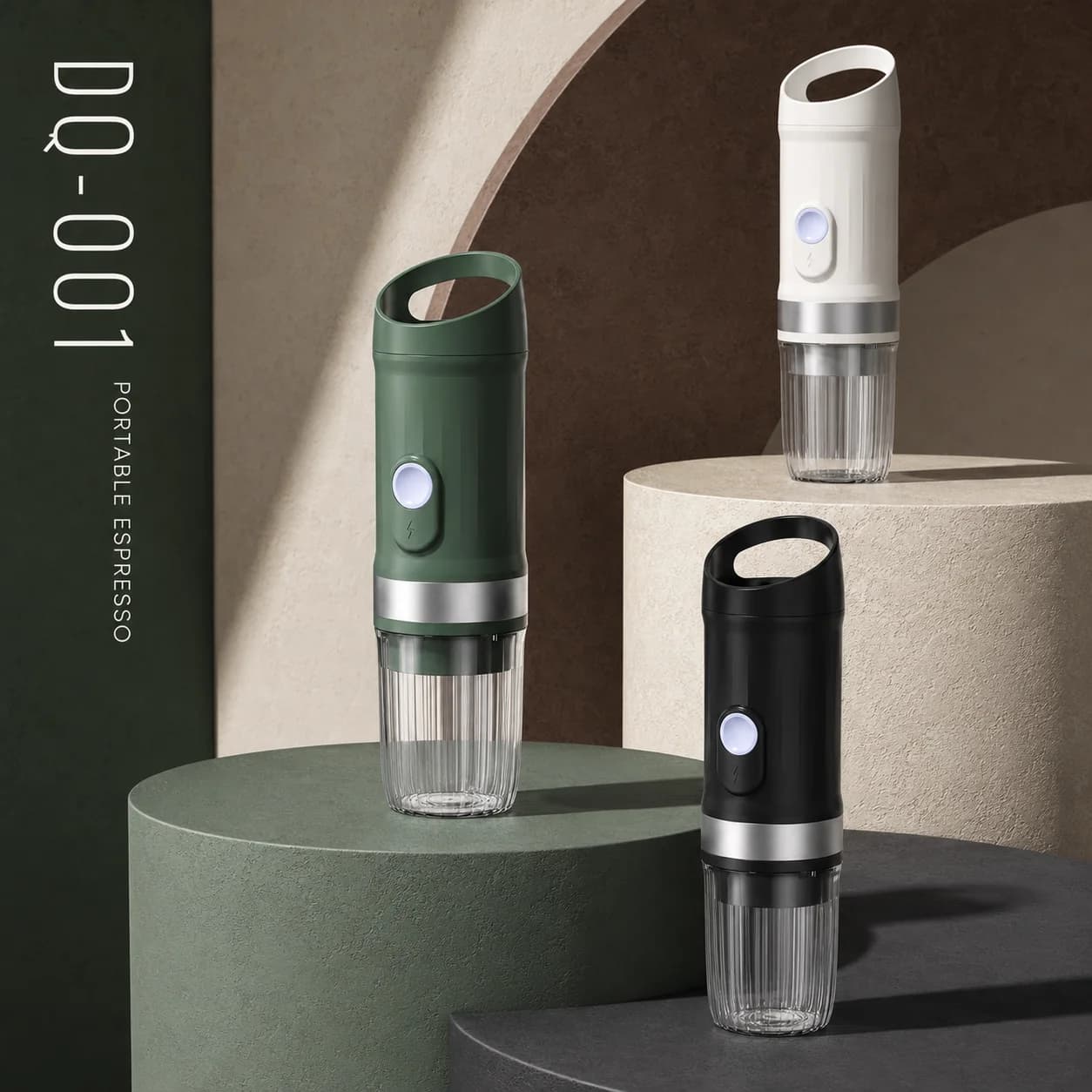
| DQ-001 | Portable flagship | 25 bar | 9600mAh / 30Wh | 300 mL | About 180 minutes, USB Type-C |
| DQ-002 | Wholesale hero | 25 bar extraction platform | 9600mAh | Single-cup portable format | Type-C fast charging |
| DQ-005 | Multi-format model | 25 bar | 9600mAh | 300 mL | About 4 hours, 5V / 3A |
| DQ-008 | Double-cup design | 25 bar | 9600mAh / 7800mAh | 250 mL per cup, double-cup design | 4 hours, Type-C |
| DQ-010 | Premium LCD multi-format model | 25 bar | 9600mAh | 325 mL | About 2 hours, USB Type-C |
| DQ-011 | Premium gifting format | 25 bar | 9600mAh | 285 mL | 2 hours, Type-C |
Questions buyers ask before approval
Is higher pressure the only factor when choosing a portable espresso machine?
No. Battery, charging, heating, cup design, coffee formats, size, operating sequence and the approved configuration should also be compared.
Why should buyers compare model pages separately?
Similar product shapes can have different batteries, charging times, cup formats and adapters. Each model page keeps the published data attached to the correct model.
Where are MOQ and final price confirmed?
They are confirmed in the formal quotation after the model, configuration, quantity, branding, packaging and destination are reviewed.
This guide uses current TK Classic product records and published OEM capabilities. Model pages remain the source of truth. Commercial terms and model-specific documents are confirmed in the quotation and inquiry process.
Turn this checklist into a model-specific quotation.
Send the model, quantity, target market, branding and accessory requirements. The sales team will confirm the open commercial items.