Technical buying checklist
25 bar portable coffee machines: what wholesalers should verify
A buyer checklist for assessing published pressure, battery, charging, adapters, cup format, documentation and repeat-order consistency before placing an order.
Short answer
Is 25 bar enough to choose a wholesale machine?
No. Treat the published pressure figure as one specification, not a guarantee of espresso quality or constant pressure at the coffee bed. Check the exact model, coffee adapters, charging instructions and heating workflow, then record sample results under stated conditions before approving an order.
1. Treat 25 bar as one line in a wider specification
The current TK Classic portable espresso range lists a 25 bar extraction platform, but a wholesale decision should not be based on pressure alone. The relevant comparison also includes battery capacity, heating time, charging format, cup size, machine dimensions and the supported coffee adapters.
Use the exact product page for the model under review. Similar silhouettes do not mean identical batteries, charging times, cups or included components.
2. Verify the power and heating workflow
Ask the supplier to identify the battery and charging specification for the selected model, then check it against the target use case. A travel product, a gift set and a retail demonstration unit can place different demands on charging time and heated-cup output.
During sample review, document the charger requirement, operating sequence and the exact sample configuration. Do not transfer a result from one model or battery option to another without confirmation.
3. Confirm the coffee format and serving system
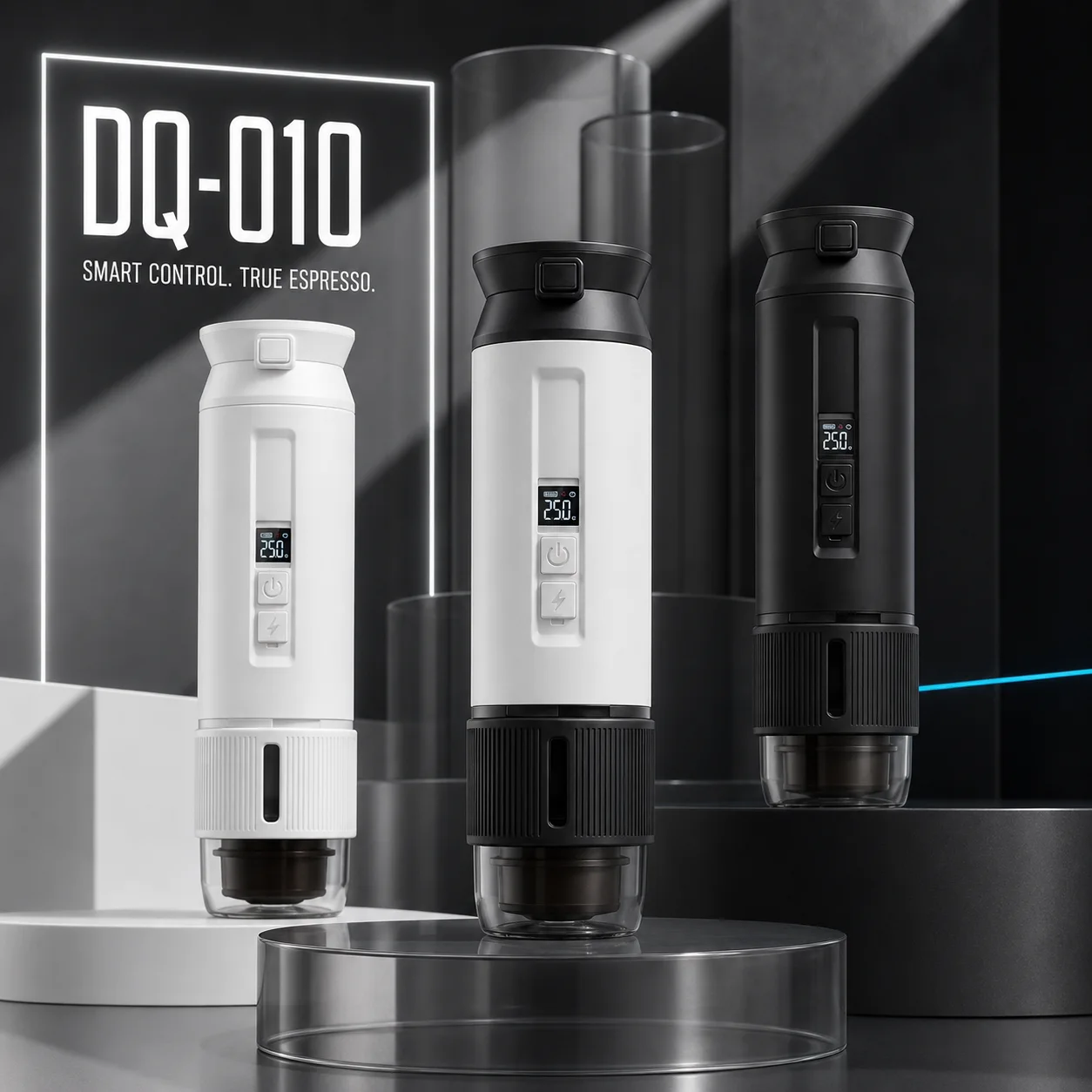
Adapter compatibility changes the buyer proposition. The revised DQ-001 manual lists capsule and ground-coffee adapters. The revised DQ-010 manual lists N-series capsules, Dolce Gusto capsules and ground coffee, plus a separate portable drip-cup method. Other models have their own published configurations. The order brief should name the required adapters rather than use a broad phrase such as ‘capsule compatible.’
- Coffee format and adapter names
- Cup size and single- or double-cup presentation
- Accessories included in the retail box
- Optional accessories offered as a separate bundle
4. Build a repeat-order reference
For repeat wholesale orders, retain the approved sample reference, artwork version, packaging structure and accessory list. The aim is to reduce ambiguity when the same SKU is reordered or localized for another market.
Compliance files, labels and manuals should be reviewed for the destination market. TK Classic provides available certification documents after inquiry; buyers should confirm which files apply to the selected model and market before order approval.
Compare only model-specific information.
These values come from the current TK Classic product records. Open the product page for the full specification and matching images.
| Model | Position | Pressure | Battery | Cup | Charging |
|---|---|---|---|---|---|
| DQ-001 | Portable flagship | 25 bar | 9600mAh / 30Wh | 300 mL | About 180 minutes, USB Type-C |
| DQ-002 | Wholesale hero | 25 bar extraction platform | 9600mAh | Single-cup portable format | Type-C fast charging |
| DQ-005 | Multi-format model | 25 bar | 9600mAh | 300 mL | About 4 hours, 5V / 3A |
| DQ-008 | Double-cup design | 25 bar | 9600mAh / 7800mAh | 250 mL per cup, double-cup design | 4 hours, Type-C |
| DQ-010 | Premium LCD multi-format model | 25 bar | 9600mAh | 325 mL | About 2 hours, USB Type-C |
| DQ-011 | Premium gifting format | 25 bar | 9600mAh | 285 mL | 2 hours, Type-C |
Questions buyers ask before approval
Does 25 bar guarantee the same result across every model?
No. Pressure is one specification. Battery, heating, coffee format, cup design, operating sequence and the approved configuration also need to be reviewed.
Should a buyer compare models from marketing images alone?
No. Use the published model page and approved sample because similar product shapes can have different specifications and included components.
Which documents should a US buyer request?
Ask for the available reports for the exact model and intended US sales channel. Review the report scope, named applicant, model coverage and dates. A certificate thumbnail or an EU document alone does not establish that all US requirements are met.
Does a 25 bar listing describe pressure throughout brewing?
The published figure alone does not describe pressure throughout a brew. Ask what the figure measures and request the applicable test conditions; do not interpret it as a pressure curve or a guarantee of taste.
What should I record when checking heating time?
Record the model, water volume, starting water temperature, battery charge and operating sequence. Keep these conditions consistent when comparing samples, and use the model instructions rather than assuming every run matches a headline time.
Are all DQ-010 coffee formats the same brewing method?
No. The DQ-010 manual lists N-series capsules, Dolce Gusto capsules and ground coffee, plus a separate portable drip method. Identify each adapter and method in the sample checklist instead of treating the drip accessory as capsule extraction.
This guide uses current TK Classic product records and published OEM capabilities. Model pages remain the source of truth. Commercial terms and model-specific documents are confirmed in the quotation and inquiry process.
Turn this checklist into a model-specific quotation.
Send the model, quantity, target market, branding and accessory requirements. The sales team will confirm the open commercial items.